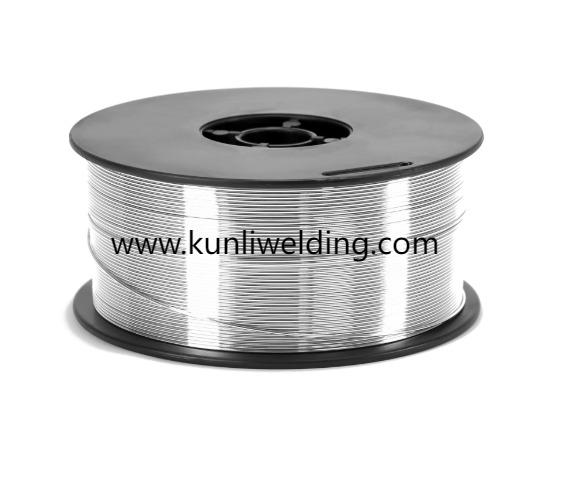
Welding technique selection plays a vital role in achieving quality Aluminum joints, and the push versus pull debate continues to spark discussion among fabricators worldwide. While many welders develop strong preferences based on personal experience, certain conditions make the push technique particularly advantageous for Aluminum MIG applications. Aluminum MIG Wire Manufacturers recognize that torch angle and travel direction interact with material properties to influence weld appearance, penetration depth, and overall joint quality in ways that deserve careful consideration.
The push technique involves angling the welding torch forward in the direction of travel, causing the arc to precede the weld puddle as the torch moves along the joint. This orientation creates specific thermal and mechanical conditions within the weld zone that affect how molten metal flows and solidifies. The shielding gas coverage behaves differently when the torch pushes forward compared to when it drags behind the puddle, influencing contamination risk and porosity formation.
Cleanliness requirements in Aluminum Welding make gas coverage a critical factor in technique selection. Aluminum forms oxides rapidly when exposed to atmosphere, and inadequate shielding leads to inclusions and compromised mechanical properties. The push method tends to provide enhanced gas coverage over the molten puddle because the torch nozzle directs shielding gas ahead of the advancing weld pool. This forward gas projection creates a protective envelope that minimizes atmospheric contamination during the critical solidification phase.
Penetration characteristics differ between push and pull techniques due to arc force direction and heat distribution patterns. Pushing the torch generally produces shallower, wider weld beads with less finger penetration into the base material. This penetration profile proves advantageous when joining thin sections where burn through risk runs high, or when working with materials having different thicknesses that require controlled heat input. The broader, flatter bead shape also facilitates multi pass welding by providing favorable surface geometry for subsequent passes.
Visual appearance considerations sometimes drive technique selection, particularly in applications where weld aesthetics matter alongside structural integrity. Push technique typically generates smoother, more consistent bead profiles with reduced spatter adherence to surrounding surfaces. The cleaner appearance reduces post weld cleanup requirements and presents a more professional finished product. Industries where welds remain visible in final assemblies often specify push techniques to achieve acceptable cosmetic standards.
Heat input management becomes crucial when welding heat sensitive Aluminum alloys or dealing with distortion prone assemblies. The push method distributes thermal energy differently than pulling, affecting the size and shape of the heat affected zone. Controlling distortion in thin gauge materials or complex geometries sometimes requires the reduced heat concentration that pushing provides. Aluminum MIG Wire Manufacturers formulate products that respond predictably to various torch angles and travel speeds, enabling welders to optimize thermal management through technique selection.
Overhead and vertical welding positions present unique challenges that influence whether pushing or pulling proves more practical. Gravity affects molten metal behavior, and torch angle must compensate for these forces while maintaining stable arc conditions and adequate shielding. The push technique often provides better puddle control in out of position welding because the torch supports the weld pool from behind while directing it forward against gravity.
Wire feeding stability interacts with torch angle to affect arc consistency and spatter generation. Pushing the torch creates different mechanical conditions within the contact tip and liner compared to pulling. Some wire feeding systems perform more reliably with one technique versus the other, depending on equipment design and wire characteristics. Understanding these equipment interactions helps welders select techniques that maximize reliability and minimize troubleshooting.
Mastering both push and pull techniques provides fabricators with flexibility to adapt their approach based on specific job requirements, material conditions, and quality expectations. Technical guidance on welding techniques and material selection is available at www.kunliwelding.com for fabricators seeking to refine their Aluminum joining processes.

 Arabic
 French
 Spanish
 Portuguese
 Deutsch
 Turkish
 Dutch
Dutch
 Italiano
 Russian
 Romaian
 Portuguese (Brazil)
 Greek
Greek