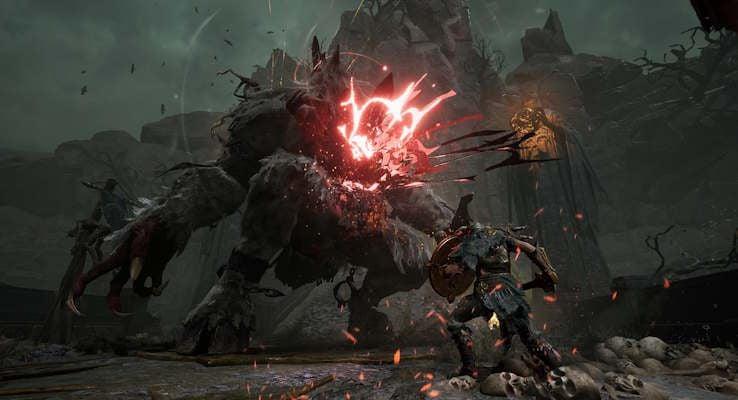
Season tasks are putting Mistfall Hunter players in a familiar bind after the September 15, 2026 Live Update: push for one more objective, or leave with the rewards already earned. That decision feels sharper when a run is carrying valuable Mistfall Hunter Gyldenblod, rare components, and several minutes of progress. The live client still rewards participation across solo, trio, and Brandrgarde Solo Mode, but the loss rules have not changed. Match loot remains temporary until a successful extraction converts it into lasting camp value, so task progress should support a strong run rather than dictate every move.
The practical problem is not understanding what a task asks for. It is judging when the task has already delivered enough value to justify leaving. A rival team arriving late, a depleted healing pouch, or a damaged weapon can turn an easy objective into a needless gamble. Players who treat every task as mandatory often stay in the field after their position has weakened, while disciplined players recognize that a completed extraction creates the foundation for steady progress over several matches.
1 Why Do Season Tasks Create Bad Decisions?
Many objectives are harmless when they overlap with normal looting and exploration. Surviving a Soul Harvest, collecting ordinary materials, or defeating a limited number of enemies can happen naturally while moving toward an exit. Trouble starts when the objective demands a specific target, a difficult area, or another player engagement after the squad has already collected a worthwhile haul.
The key mechanic is the difference between temporary progress and secured value. A task marker may look complete on the match screen, yet the run can still end with nothing retained if the team falls before reaching the exit. That creates a psychological trap: the closer a player gets to an objective, the more tempting it becomes to ignore warning signs.
◆ A nearly finished task is not a reason to accept a poor fight.
◆ Clearing one objective does not protect the inventory already collected.
◆ The best task route is usually the one that leaves several exit options open.
2 How Should Players Read Risk During a Run?
Risk in Mistfall Hunter is cumulative. Ammunition, recovery items, armor condition, map position, and team information all change the value of the next engagement. A task that looked reasonable at the start may become inefficient after two fights, especially when the squad has attracted attention or lost access to a reliable retreat path.
Solo players need a sharper threshold because every job falls on one character. Trios have more tools, but extra teammates can also encourage overconfidence. One player may scout, another may chase the task target, and the third may assume the route remains secure. That split is often more dangerous than the objective itself.
◆ Treat health, recovery supplies, and ammunition as extraction resources, not just combat resources.
◆ When the route becomes noisy, shorten the plan instead of adding another stop.
◆ After a task condition is met, reassess the map as if the match has entered its closing phase.
In practice, the strongest signal is not whether the objective is available. It is whether the squad can finish it and still leave with enough strength to handle an unexpected encounter. If the answer is uncertain, the sensible choice is to bank the current success through extraction and attempt the task again under better conditions.
3 What Loadout Choices Support Reliable Progress?
A task-oriented loadout should preserve flexibility. Players often over-specialize for the objective and arrive without the tools needed for the journey home. A weapon suited to one enemy type may perform poorly against rival teams, while an inventory packed with offensive items can leave too little space for healing or energy recovery.
For solo runs, prioritize a dependable primary weapon, one close-range answer, and enough recovery to survive the exit phase. A trio can divide responsibilities more clearly: one player carries extra sustain, another handles long-range pressure, and the third keeps room for utility. The point is not to create a perfect build. It is to make sure one bad encounter does not erase the run.
◆ Bring enough recovery to survive after the task is complete, not merely enough to reach it.
◆ Keep at least one item or ability available for disengagement.
◆ Avoid filling every inventory slot before the extraction route is secure.
Players should also review the Returner Woodling requirement before committing to a deep objective. A task route that consumes the materials needed for the exit is strategically backwards, even if the objective itself is completed. The loadout succeeds when it supports the entire match arc: entry, objective work, repositioning, and departure.
4 When Is It Time to Leave?
The cleanest extraction window usually appears immediately after a task condition is satisfied. The team knows what it has accomplished, enemy attention may still be elsewhere, and the inventory is worth protecting. Waiting for additional rewards can be correct when the route is quiet and resources are strong, but it should be a deliberate decision rather than a habit.
In a trio, call the extraction decision clearly. Everyone should know whether the group is rotating toward an exit or making one controlled final stop. Solo players can use the same discipline by setting a personal limit before entering: one objective, one valuable detour, or one extra area, then departure.
◆ Leave when the task is complete, resources are falling, and the remaining reward is uncertain.
◆ Continue only when the squad has a clear route, useful supplies, and a reason stronger than simple temptation.
◆ Never let a successful objective force you into an unfamiliar exit path without preparation.
5 How Can Players Build Steady Season Progress?
Reliable advancement comes from repeating good decisions, not from forcing the hardest objective every match. Before queueing, choose one task that fits a moderate-risk route and mark any higher-risk condition as optional. After the match, judge the decision by more than task credit: did the route preserve supplies, protect the squad, and produce a secured haul?
That review creates a useful feedback loop. If a certain objective repeatedly causes late fights, change the approach, alter the timing, or wait for a better loadout. If a task fits naturally into ordinary movement, let it accumulate in the background while the extraction plan remains in control. Players looking to manage their resources can also compare the value of their current haul with available Mistfall Hunter Gold for sale options, then decide whether another risky detour is worth the potential return. Season progress becomes far more consistent when every match has a clear stopping point and the exit remains more important than one extra reward.
U4GM Mistfall Hunter Trio Tasks and Secure Extraction Routes

 Arabic
 French
 Spanish
 Portuguese
 Deutsch
 Turkish
 Dutch
Dutch
 Italiano
 Russian
 Romaian
 Portuguese (Brazil)
 Greek
Greek