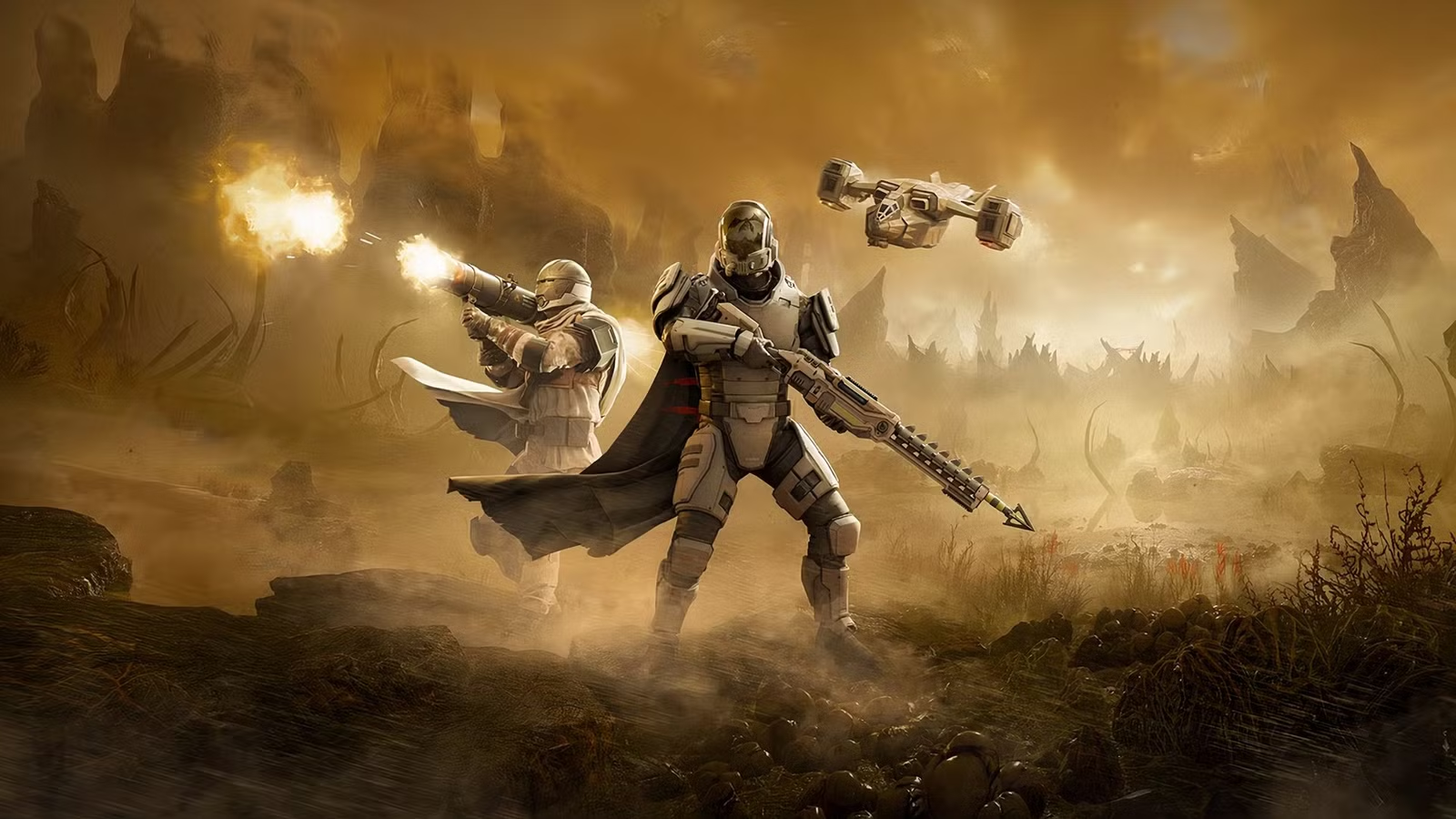
The expanding equipment pool in Helldivers 2 has changed the way squads approach preparation. More weapons, Stratagems, armor options, vehicles, and support mechanics mean that successful missions increasingly depend on combining complementary tools instead of searching for a single universal build. The latest content makes this especially clear, as the new Void-related battlefield introduces unfamiliar Illuminate threats that require both sustained damage and fast reactions. For players managing progression, Helldivers 2 Super Credits can help expand access to Warbond content, but the real advantage comes from knowing which unlocked equipment deserves a place in a regular loadout.
A useful way to evaluate equipment is to ask what problem it solves. Primary weapons generally handle routine combat and conserve limited Stratagem resources. Secondary weapons can provide emergency damage when a primary weapon needs to reload or when an enemy reaches close range. Support weapons then fill specialized roles, particularly against heavy targets or large groups. When every slot has a defined purpose, the entire loadout becomes easier to understand and use under pressure.
This approach is particularly valuable against the Illuminate. The new Wretch is built around speed and aggressive movement, making reaction time and accuracy important. The Crusher presents the opposite problem because it can regenerate while taking heavy damage, requiring players to maintain pressure instead of delivering a single burst and immediately switching targets. These two enemies alone demonstrate why a squad needs different types of damage and why equipment should be selected according to enemy behavior rather than faction labels alone.
Weapon handling can sometimes matter more than theoretical damage. Recoil, reload duration, magazine size, projectile behavior, and effective range all influence how consistently a player can land shots. Recent changes to magazine capacity and reload behavior show that developers are continuing to adjust these practical characteristics. Several weapons received additional ammunition through short-magazine configurations, while the SMG/FLAM-34 Stoker received a reload-speed improvement alongside increased ammunition availability.
These changes also create more reasons to revisit previously ignored weapons. A weapon does not need to become the strongest option in the game to become useful. If additional ammunition makes it more sustainable, or a faster reload reduces its vulnerability during close engagements, its role within a squad can change significantly. Players who regularly test older equipment after balance updates may discover alternatives that better match their individual aiming style or mission preferences.
The same principle applies to Stratagems. Eagle Napalm Airstrike, for example, received changes designed to increase its area coverage by expanding the explosion radius and spreading the bomb pattern. Anti-Tank Mines also received increased demolition strength. These changes matter because Stratagems are not simply additional sources of damage; they can control space, protect objectives, interrupt enemy movement, or create opportunities for the squad to reposition.
Vehicles add another layer to equipment planning. The Bastion Tank introduced a heavily armed battlefield option for fighting the Automaton threat, but its effectiveness depends on cooperation rather than individual use. Strong firepower does not eliminate the need for positioning, target prioritization, and protection. A squad that understands how to create space around a vehicle can gain substantially more value from it than a squad that simply deploys it in the middle of an uncontrolled engagement.
Mission difficulty also changes what qualifies as a good item. At lower difficulties, almost any reasonable loadout may be enough to complete objectives. At higher difficulties, weaknesses become much more visible. Ammunition shortages, long cooldowns, limited armor penetration, and poor crowd control can turn small mistakes into mission failures. This is why high-level preparation should prioritize coverage: enough tools to deal with common enemies, enough specialized damage for major threats, and enough utility to recover when the battlefield becomes chaotic.
Squad composition should remain flexible as well. Two players with similar weapons can still perform different roles through their Stratagem choices and armor passives. One might concentrate on aggressive damage while the other provides defensive support. This allows squads to maintain familiar weapons without forcing every player into an identical build. Communication becomes particularly important when several powerful cooldowns are available, since using them simultaneously can leave the team exposed during the next engagement.
The current equipment environment also makes experimentation more rewarding. Rather than copying a popular loadout without modification, players can begin with a proven weapon and replace one component at a time. A different secondary can change how close-range encounters are handled, while a different support weapon can completely alter how the squad approaches heavy enemies. This method makes it easier to identify which changes genuinely improve performance instead of changing an entire build and being unable to determine what actually helped.
There is also a practical reason to avoid collecting equipment without a plan. More options do not automatically mean better performance. A large inventory can contain several items that serve nearly identical functions while leaving an important combat role uncovered. Prioritizing equipment that expands tactical coverage makes progression more meaningful and helps ensure that newly acquired items have a realistic place in future missions.
U4GM can provide a convenient place to review available game-related options, while final equipment decisions should remain connected to actual mission requirements and personal playstyle. For players comparing HD2 Items, the strongest approach is not simply choosing the most popular option, but identifying which equipment adds a new capability, complements the existing squad, and remains useful across the missions that are played most often.

 Arabic
 French
 Spanish
 Portuguese
 Deutsch
 Turkish
 Dutch
Dutch
 Italiano
 Russian
 Romaian
 Portuguese (Brazil)
 Greek
Greek