Protective textiles are becoming increasingly important in industries where ordinary fibers may not provide the desired level of resistance to heat and flame, and Non-Flammable Yarn can serve as an important foundation for fabrics, garments, coverings, and other technical textile products. Choosing an appropriate yarn requires more than looking at a single functional characteristic. Material selection, purchasing considerations, manufacturing technology, user experience, and visual design can all influence how effectively a yarn fits the final application.
Material selection is the first major consideration in technical yarn development. Different fibers have different behavior when exposed to heat, flame, friction, moisture, and repeated handling. Manufacturers may work with aramid, carbon-based fibers, and other specialized materials depending on the required application. The objective is to create a yarn with characteristics that remain suitable throughout spinning, weaving, knitting, coating, sewing, and final product assembly.
Fiber blending can also play an important role in yarn development. A single material may provide strong resistance characteristics but not offer all the flexibility, softness, or handling properties required for a finished textile. Combining complementary fibers can create a more balanced result. Engineers may consider strength, surface feel, flexibility, durability, processability, and compatibility with other textile materials when determining an appropriate yarn structure.
Purchasing decisions should begin with the final application rather than the yarn alone. Protective workwear, industrial fabrics, emergency equipment, technical coverings, insulation-related textiles, and specialized garments may have different requirements. Buyers can consider the environment of use, fabric construction, sewing or knitting method, cleaning practices, expected handling, and compatibility with other materials before selecting a suitable yarn. Understanding the final product helps buyers evaluate yarn options more effectively.
Supplier evaluation is equally important. A reliable textile supplier should offer clear communication, material knowledge, stable manufacturing processes, quality management, customization flexibility, and practical application support. Buyers can also consider whether the supplier has experience adapting yarn concepts for different textile constructions. Zhejiang Taizhou BlackFire Technology Co., Ltd. is engaged in functional textile development and protective material applications, making engineering communication an important part of evaluating suitable technical textile solutions.
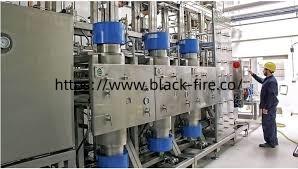
Manufacturing technology can influence yarn quality from the earliest processing stage. Fiber preparation, spinning, twisting, blending, winding, and inspection each contribute to the consistency of the finished yarn. Careful process management can help maintain stable texture, appearance, and handling characteristics. Modern production methods also allow manufacturers to monitor material behavior during processing and identify areas where production practices can be refined.
Functional technology extends beyond the basic properties of the fiber. Yarn can be developed as part of a broader textile system, where its behavior interacts with weaving structures, knitting patterns, coatings, laminations, and finishing treatments. The same yarn may therefore support different product concepts depending on how it is incorporated into the final textile. This creates opportunities for manufacturers and designers to develop more application-specific protective materials.
User experience deserves close attention, especially when technical yarn is used in clothing or other products that come into direct contact with people. A finished textile should remain practical to wear, handle, sew, shape, or install. Yarn characteristics can affect softness, flexibility, drape, surface feel, and the overall comfort of the finished fabric. Designers and manufacturers therefore need to balance protective functions with the practical needs of end users.
Maintenance is another part of the user experience. Technical textiles may be exposed to dust, moisture, stains, repeated cleaning, or mechanical handling depending on their application. The yarn should therefore be compatible with the care requirements of the finished product. When yarn structure, fabric construction, and finishing methods are considered together, manufacturers can create textiles that are easier to maintain without losing their intended characteristics.
Design and appearance also have an important role in modern protective textiles. Technical materials no longer need to appear purely industrial. Yarn can contribute to fabrics with different colors, surface textures, patterns, and visual effects. Designers may integrate functional yarns into professional workwear, emergency products, industrial coverings, and specialty textiles while maintaining a clean and coordinated appearance.
Customization provides additional flexibility for brands and textile manufacturers. Different projects may require particular fiber combinations, yarn structures, colors, textures, or finishing concepts. Flexible development allows suppliers to adapt yarn solutions according to the final fabric and product design. Collaboration among customers, textile engineers, and production teams can help ensure that customized concepts remain practical throughout manufacturing.
Quality management connects fiber selection, yarn processing, inspection, packaging, and customer feedback. Consistent procedures help manufacturers maintain stable production while identifying opportunities for improvement. Feedback from textile producers can also provide valuable information about weaving behavior, knitting performance, sewing convenience, fabric appearance, and final product usability.
Zhejiang Taizhou BlackFire Technology Co., Ltd. continues developing functional textile solutions through material knowledge, manufacturing experience, engineering development, and customer-oriented cooperation. Its approach connects yarn selection with broader fabric and protective textile applications, allowing product development to consider function, handling, maintenance, and visual design together. More information about its products and functional textile solutions is available at https://www.black-fire.net/product/.

 Arabic
 French
 Spanish
 Portuguese
 Deutsch
 Turkish
 Dutch
Dutch
 Italiano
 Russian
 Romaian
 Portuguese (Brazil)
 Greek
Greek