Introduction
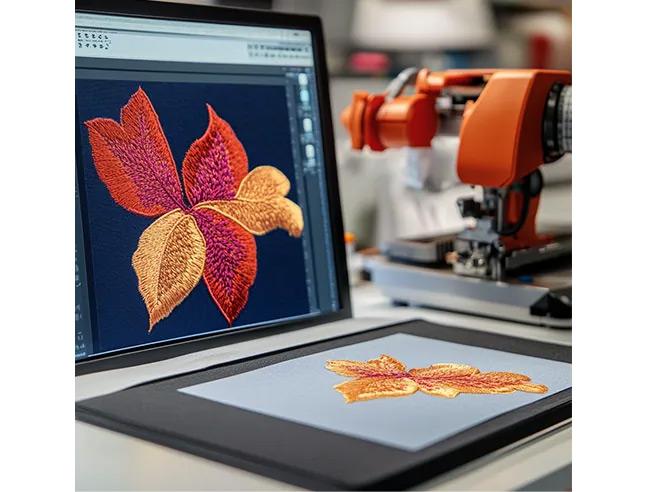
The world of embroidery is experiencing a technological shift. For decades, the process of turning a digital image into a machine-readable file remained largely unchanged. It required a skilled human digitizer to manually plot every stitch, a process that was time-consuming and expensive. But now, a new player has entered the field: artificial intelligence. Artificial intelligence for embroidery digitizing promises to change everything. It offers the tantalizing possibility of instant file conversion, automated stitch placement, and dramatically reduced costs. You can upload a logo and receive a stitch file in seconds. This sounds like a dream come true for busy embroiderers and business owners. However, as with any new technology, the reality is more nuanced. AI is not a magic wand, nor is it simply a passing fad. It is a powerful tool that, when used correctly, can significantly speed up workflows and lower barriers to entry. Yet, it also has clear limitations that can lead to disastrous results on the production floor. In this article, we will cut through the hype and examine exactly what AI can and cannot do for embroidery digitizing, helping you make smart decisions for your projects.
What AI Digitizing Actually Does
Let us start with the basics. When people talk about AI in embroidery digitizing, they are usually referring to automated software that analyzes an image and generates stitch data with little to no human input. Platforms like Wilcom's auto-digitizing features have been available for years, but newer AI models have taken things a step further.
Some modern platforms use AI to do more than just trace shapes. They can take a text prompt or a basic image and generate an embroidery-optimized design from scratch. For example, one platform uses Google's Gemini AI to turn text prompts into images, which then get processed through a pipeline that cleans up the background, reduces colors to a manageable number (usually around ten threads), and converts the image into an embroidery file format like DST. Researchers are also exploring how AI can assist with more complex tasks, like recreating and preserving traditional cultural embroidery patterns using models trained on historical designs. These are fascinating developments that show the potential of AI to go beyond simple automation.
Where AI Shines: Speed and Initial Concepts
The most obvious benefit of AI digitizing is speed. A human digitizer can take hours or even days to complete a complex file. An AI tool can produce a file in minutes or seconds. This speed is a massive advantage for businesses that need quick quotes or rough mockups to show clients. It allows you to test different design ideas without waiting for a digitizer to become available.
AI is also very effective for handling the "grunt work." It can quickly clean up artwork, remove backgrounds, and simplify colors. When the design is very simple, such as a large geometric shape or a block letter, an AI-generated file might be perfectly adequate. For brands wanting to experiment with new designs without a significant upfront investment, AI offers a low-risk way to visualize concepts. As one project description explains, the goal is to automate a process that is currently "time-consuming and human labour-intensive," making mass customization more accessible.
The Critical Shortcomings of AI Digitizing
This is where we need to pump the brakes. While AI is impressive, it consistently stumbles when moving from a digital preview to a physical, sewn product. The digital preview often looks perfect, but the actual stitch-out fails. The core problem is that AI lacks a fundamental understanding of the physical world of embroidery.
Embroidery is a physical process. A needle punches thread through fabric at high speed, creating tension and pulling the material. AI software cannot "feel" the fabric or "understand" how different materials will react. It applies generic settings, whereas a human digitizer makes critical decisions based on the specific fabric type, whether it is a stretchy polo shirt, a thick jacket, or a structured cap. Without this adaptation, the results are predictable: puckering, thread breaks, and distortion.
The Human Elements AI Cannot Replace
A professional digitizer does far more than just "convert" a file. They are production planners who build a design with the sewing process in mind. This involves several key skills that AI has not yet mastered.
One of the most important is pull compensation. Because thread pulls on the fabric, a digitizer deliberately warps the digital shapes in the opposite direction. They might make a circle slightly oval so that after the stitches are applied, it looks perfectly round. AI tools generally ignore this physics-driven movement, leading to designs that look warped on the final product.
Underlay is another critical area. These are the first layers of stitches, hidden from view, that stabilize the fabric and prevent the top stitches from sinking in. AI often skips underlay or applies it poorly, resulting in a weak foundation. Finally, there is the issue of fine details like small text. AI struggles to make text under 4mm legible, as the letters can "close up" and become unreadable blobs. A human digitizer will adjust spacing, simplify shapes, and change stitch types to keep the text crisp.
The Future is Collaboration, Not Replacement
So, is AI a threat to the digitizing profession? Not really. The consensus among industry experts is that AI will not fully replace manual digitizing because it lacks the judgment required for real-world production. Instead, AI is becoming a powerful assistant.
The best workflow is a collaborative one. AI handles the initial heavy lifting, providing a rough draft or a starting point. A human digitizer then steps in to refine the file. They check the stitch paths, adjust densities, fix the underlay, and ensure the design will work on the intended garment. This hybrid approach leverages the speed of AI and the expertise of a human professional, resulting in high-quality files that are delivered faster than ever before.
Conclusion
The arrival of artificial intelligence in embroidery digitizing is not a revolution, but an evolution. It is a powerful tool that is undeniably changing the landscape, making the process faster and more accessible. AI is fantastic for creating quick mockups, generating simple files, and handling basic prep work. It allows businesses to offer faster quotes and experiment with more designs. However, it is not a replacement for the skilled, human digitizer. The physical realities of thread, fabric, and machine tension still require human judgment and experience. The most reliable path to flawless stitch accuracy is a partnership between the speed of AI and the expertise of a professional digitizer. Embrace the new tools for what they are, but do not forget the human touch that turns a file into a masterpiece.

 English
 Arabic
 French
 Spanish
 Portuguese
 Deutsch
 Turkish
 Italiano
 Russian
 Romaian
 Portuguese (Brazil)
 Greek