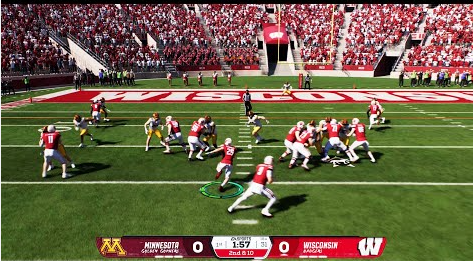
1. Overusing the RPO
While tempting, calling RPOs on CFB 26 Coins every down makes your offense predictable. The AI in College Football 26 adapts quickly, and defenders will start jumping passing lanes or blitzing your mesh point. Mix in traditional runs, play action, and deep shots to stay unpredictable.
2. Making Slow Reads
The essence of the RPO is speed. Hesitation at the mesh point gives defenders time to recover, often leading to sacks or tipped passes. Train yourself in practice mode to make your read—linebacker commits, ball out—within a split second.
3. Ignoring Defensive Fronts
Not every defensive look is ideal for the RPO. Running an inside zone RPO against a stacked box is a recipe for disaster. Learn to recognize fronts and shift into audibles when the defense is showing heavy pressure.
4. Forcing the Pass Every Time
The “pass” in RPO doesn’t mean it’s always the right choice. Some players try to pad stats by throwing every snap, but if the linebacker drops, the run is usually the higher-percentage option. Be disciplined—take what the defense gives you.
5. Poor Receiver Selection
RPOs often hinge on quick-hitting routes like slants, bubbles, or hitches. Calling an RPO with a slow-developing deep route wastes the timing advantage and leads to incompletions. Stick to fast, high-efficiency routes designed for RPOs.
6. Not Protecting the Football
The mesh point exchange between QB and RB is where fumbles can happen, especially if you’re indecisive. Avoid toggling too late between run and pass, and make sure your QB has strong ball security ratings before leaning heavily on RPOs.
7. Forgetting About Player Stamina
Tempo-heavy RPO schemes wear down your offense as much as the defense. Overworking your QB or RB with constant decisions leads to fatigue, reduced accuracy, and more mistakes in cheap NCAA Football 26 Coins crunch time. Rotate players and balance tempo to stay sharp.

 English
 Arabic
 French
 Spanish
 Portuguese
 Deutsch
 Turkish
 Dutch
Dutch
 Italiano
 Russian
 Romaian
 Portuguese (Brazil)